
What Is a Bid Bond? (Complete Guide for Contractors)
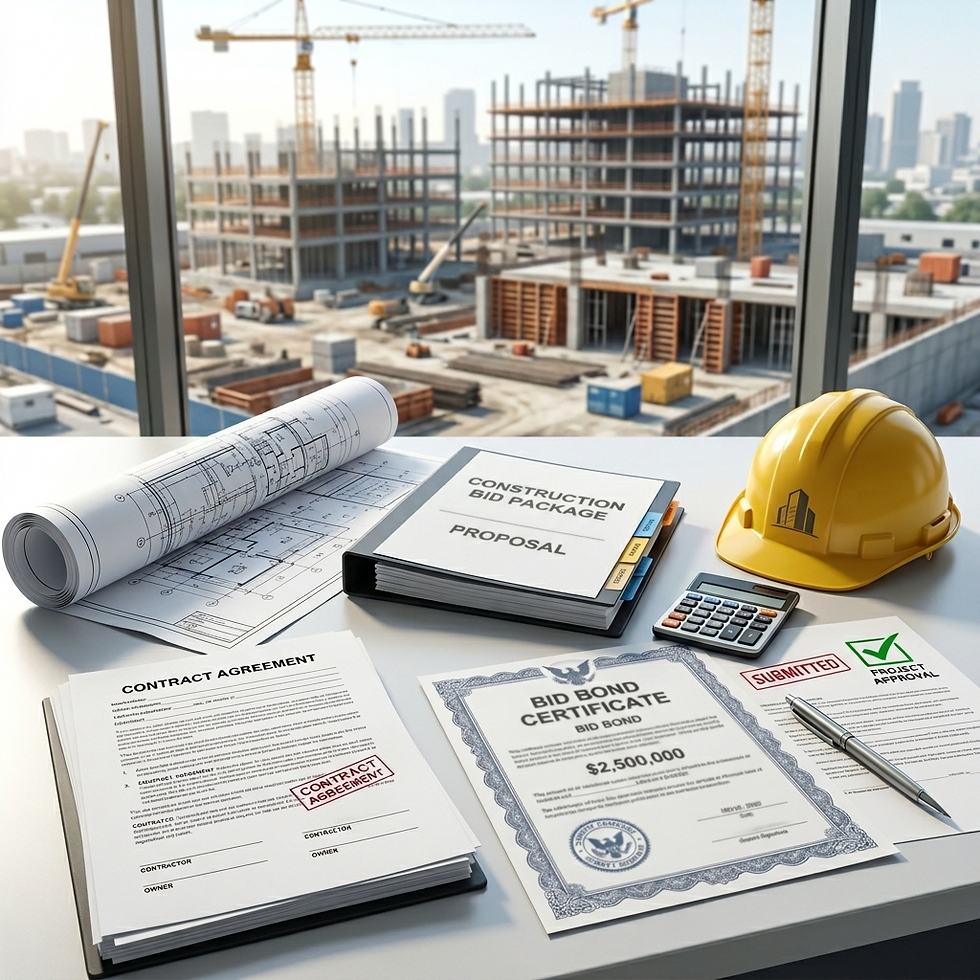
If you're bidding on public construction projects or large commercial jobs, you've probably encountered a requirement for a bid bond.
Many contractors, especially those new to government or commercial work, wonder:
What is a bid bond, and why do I need one?
The answer is simple:
A bid bond helps assure the project owner that you're serious about your bid and financially capable of completing the project if selected.
In this guide, we'll explain how bid bonds work, who needs them, how much they cost, and why they're often required on construction projects.
What Is a Bid Bond?
A bid bond is a type of surety bond that guarantees a contractor will honor the terms of their bid if awarded the contract.
If a contractor submits a bid and is selected for the project, the bid bond guarantees that the contractor will:
✔ Accept the contract
✔ Provide any required performance bonds
✔ Provide any required payment bonds
✔ Begin the project under the agreed terms
Without a bid bond, a contractor could submit a low bid and then refuse to move forward after winning the project.
Why Are Bid Bonds Required?
Project owners use bid bonds to protect themselves from financial losses.
Without a bid bond:
Contractors could submit unrealistic bids
Contractors could withdraw after winning
Project owners might need to restart the bidding process
Projects could be delayed
Bid bonds help ensure that contractors submit serious and realistic proposals.
How Does a Bid Bond Work?
There are three parties involved:
Principal
The contractor submitting the bid.
Obligee
The project owner requiring the bond.
Surety
The bonding company providing the guarantee.
The surety guarantees that the contractor will fulfill their obligations if awarded the contract.
Example of a Bid Bond
Imagine a city requests bids for a new public works project.
A contractor submits a bid of:
$1,000,000
The contractor includes a bid bond with the proposal.
The city awards the contract to the contractor.
If the contractor refuses to sign the contract after winning:
The city may incur additional costs
The city may need to accept a higher bid
The city can make a claim against the bid bond
The surety may compensate the city for certain losses up to the bond's limits.
How Much Is a Bid Bond?
In many cases, bid bonds are issued at little or no cost when contractors qualify for larger bonding programs.
Common bid bond amounts include:
5% of the bid amount
10% of the bid amount
Other percentages specified by the project owner
The required amount is typically listed in the project specifications.
When Is a Bid Bond Required?
Bid bonds are commonly required for:
Government Projects
Federal, state, county, and municipal projects often require bid bonds.
Public Works Projects
Roads, bridges, schools, and public facilities frequently require bonding.
Commercial Construction
Private developers may require bid bonds on larger projects.
Specialty Construction Projects
Certain industrial and infrastructure projects may also require bid bonds.
What Happens If You Win the Bid?
If your bid is accepted, you'll generally need to:
✔ Sign the contract
✔ Provide any required performance bond
✔ Provide any required payment bond
✔ Begin the project according to the contract terms
At that point, the bid bond has served its purpose.
What Happens If You Refuse the Contract?
If you refuse to proceed after being awarded the project, the project owner may file a claim.
Potential consequences include:
Financial liability
Difficulty obtaining future bonds
Damage to your reputation
Loss of future project opportunities
This is why contractors should only bid projects they are prepared to perform.
Bid Bond vs Performance Bond
Many contractors confuse these two bonds.
Protects the project owner during the bidding process.
Protects the project owner during project completion.
A bid bond guarantees you'll accept the project.
A performance bond guarantees you'll complete the project.
Bid Bond vs Payment Bond
Protects the project owner before work begins.
Protects subcontractors, suppliers, and laborers by helping ensure they are paid.
Many projects require both performance and payment bonds after contract award.
How Do Contractors Qualify for Bid Bonds?
Surety companies often review:
Business experience
Financial strength
Credit history
Work history
Current workload
The stronger your financial profile, the easier it is to obtain bonding.
Need a Bid Bond?
All American Bonds and Insurance helps contractors nationwide obtain:
✅ Bid Bonds
✅ Performance Bonds
✅ Payment Bonds
✅ Contractor License Bonds
✅ Fast Approvals
✅ Competitive Rates
📞 844-321-2663
Our team can often assist qualified contractors quickly so you can meet bid deadlines.
Common Bid Bond Mistakes
❌ Waiting Until the Last Minute
Many contractors wait until the day bids are due.
Bond approval may require financial review.
❌ Bidding Projects Beyond Capacity
Only bid projects your company can realistically perform.
❌ Ignoring Bond Requirements
Failure to submit the required bond can result in bid rejection.
❌ Misunderstanding Bond Limits
Always verify the required bond amount before submitting your bid.
Benefits of Having Bond Capacity
Contractors with established bonding programs often gain access to:
✔ Larger projects
✔ Government contracts
✔ More bidding opportunities
✔ Greater credibility
✔ Increased growth potential
Bonding can be a valuable tool for expanding your business.
Final Thoughts
A bid bond is one of the most common requirements for public and commercial construction projects.
It protects project owners by ensuring contractors stand behind their bids and are prepared to move forward if awarded the contract.
For contractors looking to pursue larger projects, understanding bid bonds is an important step toward growing a successful construction business.
FAQ
What does a bid bond do?
A bid bond guarantees that a contractor will honor their bid and accept the contract if awarded the project.
Are bid bonds required on every project?
No. However, they are commonly required on public works and larger commercial projects.
How much is a bid bond?
The required amount is typically a percentage of the total bid amount, often 5% to 10%.
What happens if a contractor backs out after winning?
The project owner may file a claim against the bid bond.
Can a new contractor get a bid bond?
Yes. Many new contractors can qualify for bid bonds depending on their financial profile and project requirements.



Comments