
How to Start a Used Car Dealership (Complete Step-by-Step Guide)

Owning a used car dealership can be a rewarding and profitable business. Every year, millions of consumers purchase pre-owned vehicles, creating tremendous opportunities for entrepreneurs who are prepared to meet customer demand.
However, opening a dealership involves much more than finding vehicles to sell. You'll need to establish your business, obtain the proper dealer license, secure a motor vehicle dealer bond, purchase the right insurance, and comply with your state's regulations.
Whether you're opening your first independent dealership or expanding into a new market, this step-by-step guide explains everything you need to know about starting a successful used car dealership.
Why Start a Used Car Dealership?
The used vehicle market continues to grow as more consumers seek affordable transportation.
Owning a dealership allows you to generate revenue through:
Vehicle sales
Trade-ins
Financing opportunities
Extended warranties
Service contracts
GAP coverage
Vehicle accessories
With proper planning and strong business practices, a used car dealership can become a long-term, profitable investment.
Step 1: Develop a Business Plan
Every successful dealership starts with a solid business plan.
Your plan should outline:
Business goals
Startup costs
Financing needs
Target customers
Inventory strategy
Marketing plan
Staffing requirements
Revenue projections
Operating expenses
A well-developed business plan can also help you secure financing from banks or investors.
Step 2: Choose a Business Structure
Before applying for a dealer license, you'll need to establish your business entity.
Common business structures include:
Limited Liability Company (LLC)
Corporation
Sole Proprietorship
Partnership
Many dealership owners choose an LLC or corporation because they can provide liability protection and potential tax advantages. Consult a qualified attorney or tax professional to determine which structure best fits your needs.
Step 3: Register Your Business
Register your business with the appropriate state agencies.
You may also need to obtain:
Employer Identification Number (EIN)
State sales tax permit
Local business license
County or municipal occupational license (if applicable)
Be sure your legal business name is consistent across all licensing, bonding, and insurance documents.
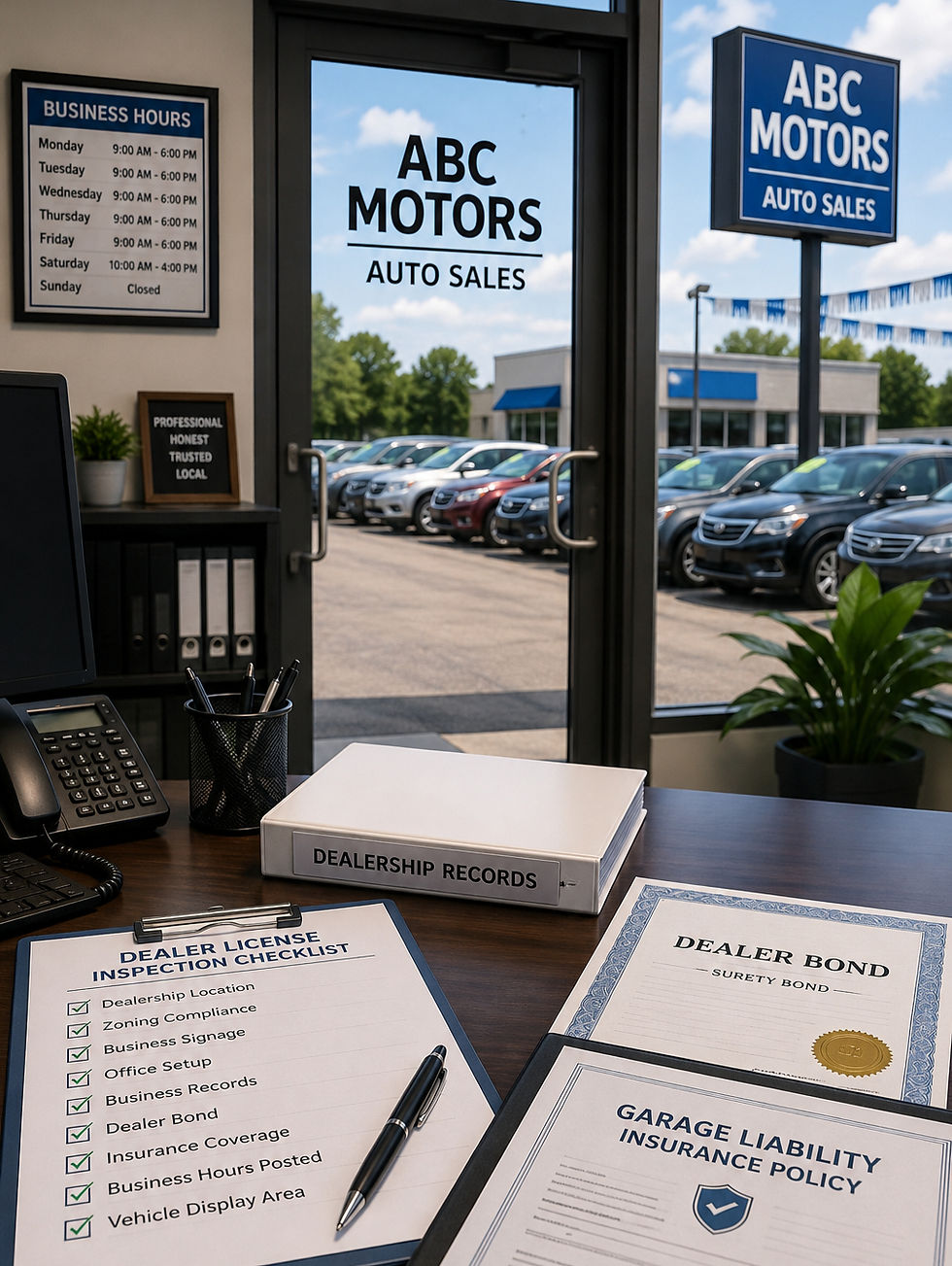
Step 4: Find a Compliant Dealership Location
Nearly every state requires dealerships to maintain a permanent place of business.
Although requirements vary, your location may need:
Permanent office
Vehicle display lot
Permanent business sign
Business telephone
Office furniture
Record storage area
Proper zoning approval
Some states also require an on-site inspection before issuing your dealer license.
Choosing a highly visible location with strong traffic can also improve sales opportunities.
Step 5: Apply for Your Motor Vehicle Dealer License
Before you can legally sell vehicles, you'll typically need a Motor Vehicle Dealer License issued by your state's licensing agency.
The application process may require:
Dealer license application
Dealer education course
Background check
Fingerprinting
Business registration documents
Photographs
Dealer inspection
License fees
Each state has its own licensing requirements, so always review your state's dealer licensing guidelines.
Step 6: Obtain Your Motor Vehicle Dealer Bond
Most states require licensed dealers to obtain a Motor Vehicle Dealer Surety Bond before a license will be issued.
A dealer bond helps protect consumers by ensuring dealerships comply with state laws and licensing regulations.
If a dealer violates state laws and a valid claim is filed against the bond, the surety company may compensate the injured party. The dealer is generally responsible for reimbursing the surety for any valid claims paid.
Bond amounts vary by state and are established by state law.
Why Choose All American Bonds and Insurance?
Getting your dealer bond and insurance doesn't have to be complicated.
For more than 10 years, All American Bonds and Insurance has helped independent dealerships across the United States obtain the bonds and insurance required to become licensed and stay protected.
We proudly offer:
✅ Fast Approvals
✅ Competitive Rates
Our experienced team understands dealer licensing requirements in all 50 states and can help you obtain the right coverage quickly and affordably.
Need a Dealer Bond or Garage Liability Insurance?
📞 844-321-2663
We're an industry-trusted provider helping independent auto dealers nationwide obtain the bonds and insurance they need to launch and protect their businesses.
Step 7: Purchase Dealer Insurance
In addition to your dealer bond, you'll likely need several insurance policies.
Common coverages include:
Having the proper insurance helps protect your dealership, inventory, employees, and customers from unexpected losses.
Step 8: Build Your Inventory
Inventory is one of the largest investments for any dealership.
Successful dealers source vehicles from multiple channels, including:
Dealer-only auctions
Customer trade-ins
Private sellers
Lease returns
Fleet sales
Wholesale dealers
Dealer-to-dealer trades
Purchasing the right inventory at the right price is critical to maximizing profitability.
Step 9: Secure Inventory Financing
As your dealership grows, you'll need sufficient capital to maintain inventory.
Common financing options include:
Floor plan financing
Business lines of credit
Commercial loans
Cash purchases
The right financing strategy can help improve cash flow while allowing you to keep your lot stocked with desirable vehicles.
Step 10: Invest in the Right Software
Technology plays a major role in modern dealerships.
Consider investing in:
Dealer Management System (DMS)
Customer Relationship Management (CRM) software
Accounting software
Inventory management software
Digital marketing tools
These systems help streamline operations, improve efficiency, and provide a better customer experience.
Step 11: Market Your Dealership
Even the best inventory won't sell if customers don't know your dealership exists.
Effective marketing strategies include:
Search Engine Optimization (SEO)
Google Business Profile
Google Ads
Facebook advertising
Social media marketing
Email marketing
Vehicle listing websites
Customer referral programs
Consistent marketing helps generate leads and grow your customer base.
How Much Does It Cost to Start a Used Car Dealership?
Startup costs vary based on your location, inventory, facility, and business model.
Common expenses include:
Dealer license fees
Insurance premiums
Inventory purchases
Office equipment
Lot improvements
Software subscriptions
Marketing
Employee wages
Creating a realistic startup budget is one of the most important steps before opening your dealership.
Common Mistakes New Dealers Make
❌ Underestimating Startup Costs
Always budget for unexpected expenses.
❌ Buying the Wrong Inventory
Research your local market before purchasing vehicles.
❌ Waiting Too Long to Obtain Your Bond and Insurance
Obtaining your surety bond and liability insurance early can help prevent licensing delays.
❌ Ignoring State Licensing Requirements
Every state has different dealer licensing laws.
❌ Neglecting Marketing
A consistent marketing strategy is essential for attracting customers and building your brand.
Tips for Long-Term Success
Successful dealerships often:
✔ Focus on customer service
✔ Monitor inventory turn rates
✔ Diversify inventory sources
✔ Build relationships with wholesalers and auctions
✔ Invest in digital marketing
✔ Maintain compliance with state regulations
✔ Protect their business with the proper insurance coverage
Final Thoughts
Starting a used car dealership requires careful planning, financial preparation, and compliance with your state's licensing requirements. By establishing your business, obtaining the proper dealer license, securing your dealer bond and insurance, and implementing a smart inventory strategy, you'll build a strong foundation for long-term success.
Working with an experienced provider like All American Bonds and Insurance makes obtaining your Motor Vehicle Dealer Bond and Garage Liability Insurance simple, so you can focus on growing your dealership with confidence.
Frequently Asked Questions
Do I need a dealer license to start a used car dealership?
Yes. In most states, you'll need a Motor Vehicle Dealer License before selling vehicles as a business.
Do I need a Motor Vehicle Dealer Bond?
Yes. Most states require licensed dealers to obtain a Motor Vehicle Dealer Surety Bond as part of the licensing process.
What insurance does a used car dealership need?
Most dealerships carry Garage Liability Insurance, Dealer Open Lot Insurance, Commercial Property Insurance, Commercial Auto Insurance, and Workers' Compensation Insurance (if required).
How much money do I need to start a used car dealership?
Startup costs vary depending on your state, inventory, facility, and business model. Common expenses include licensing fees, bonds, insurance, inventory, marketing, software, and operating capital.
Can I operate a used car dealership from my home?
Generally, no. Most states require dealerships to maintain a permanent business location that meets zoning, office, display lot, and inspection requirements before a dealer license will be issued.


Comments