
How to Pass a Dealer License Inspection (Step-by-Step Guide)
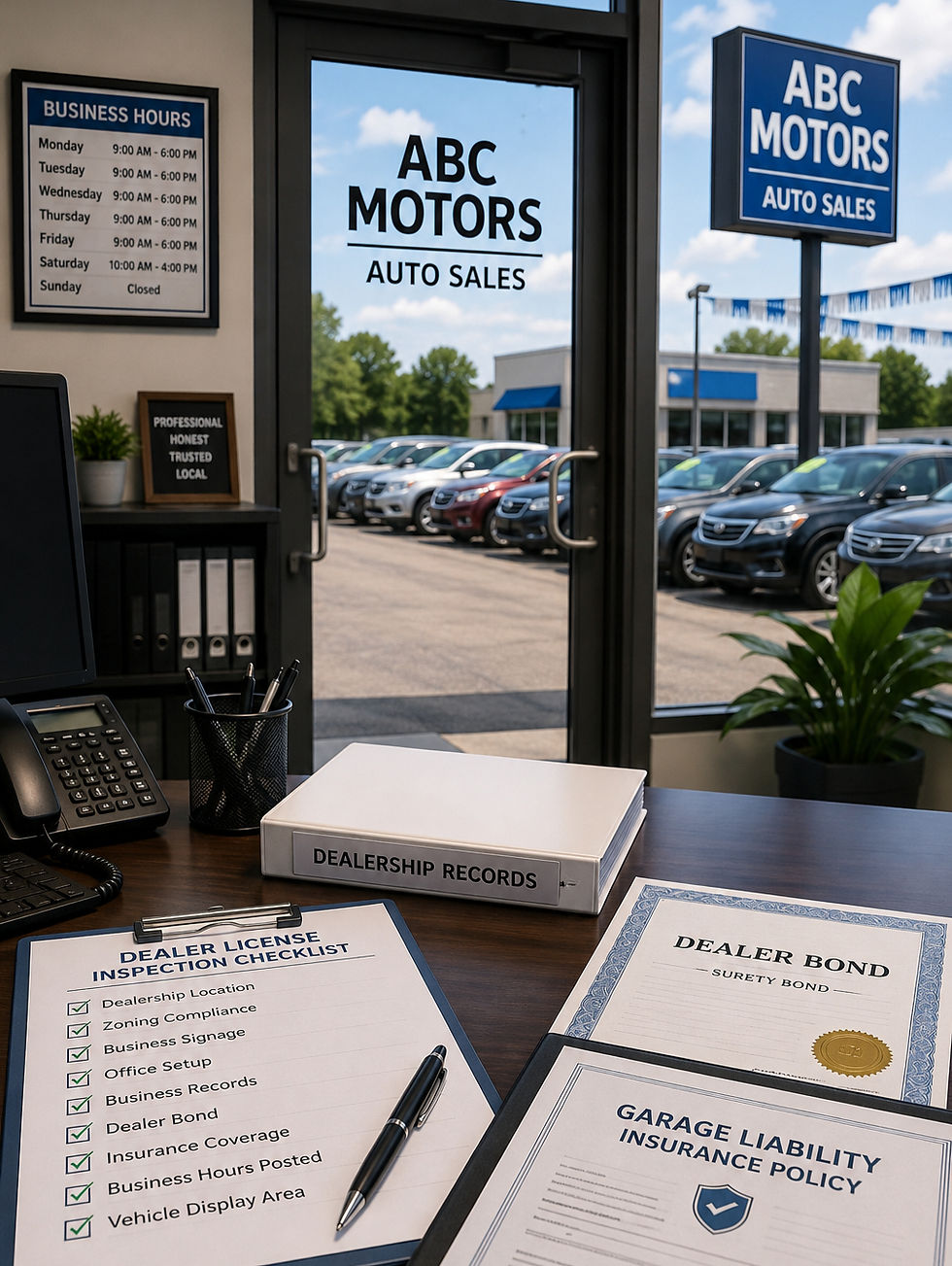
If you're applying for an auto dealer license, one of the most important parts of the process is the dealer license inspection.
Many new dealers worry about the inspection because they aren't sure what inspectors are looking for or what requirements must be met before approval.
The good news is that most inspections are straightforward if you prepare properly.
In this guide, we'll explain what happens during a dealer license inspection, common reasons applicants fail, and how to ensure your dealership is ready for approval.
What Is a Dealer License Inspection?
A dealer license inspection is conducted to verify that your dealership meets state licensing requirements before a dealer license is issued.
The inspection helps confirm that:
✔ Your dealership location exists
✔ Your office is properly set up
✔ Required signage is installed
✔ Business records can be maintained
✔ The location complies with state regulations
The purpose is to ensure dealers are operating from legitimate business locations and are prepared to conduct business legally.
Why Do States Require Inspections?
Dealer inspections help protect consumers by ensuring dealerships:
Operate from approved locations
Meet zoning requirements
Maintain proper records
Comply with state laws
Conduct business professionally
Most states require some form of location verification before issuing a license.
Step 1: Verify Your Location Meets Requirements
Before scheduling an inspection, confirm that your location complies with state and local requirements.
Common requirements include:
Permanent business location
Commercial zoning approval
Dedicated office space
Public accessibility
Proper business address
One of the most common reasons applicants fail inspections is choosing a location that doesn't meet zoning requirements.
Always verify zoning before signing a lease.
Step 2: Install Proper Business Signage
Most states require permanent exterior signage.
Your sign should generally:
✔ Display your dealership name
✔ Be permanently mounted
✔ Be clearly visible from the roadway
✔ Match your business records
Temporary banners and handwritten signs are often not acceptable.
Inspectors frequently verify signage during the inspection process.
Step 3: Prepare Your Dealership Office
Your office should be fully operational before the inspection.
Common office requirements include:
Desk
Chair
Telephone
Internet access
Secure storage for records
Business documents
The office should appear ready to conduct business immediately.
An empty room may raise concerns during an inspection.
Step 4: Display Required Business Documents
Some states require certain documents to be available at the dealership.
Examples may include:
Business registration documents
Sales tax permits
Local business licenses
Dealer application paperwork
Having organized documentation demonstrates professionalism and preparedness.
Step 5: Verify Your Dealer Bond
Many dealer license applicants are required to obtain a dealer surety bond.
Before your inspection:
✔ Verify the surety bond is active
✔ Ensure the business name matches your application
✔ Confirm the bond amount meets state requirements
Bonding issues can delay licensing approval.
Need a Dealer Bond?
All American Bonds and Insurance helps dealers nationwide obtain:
✅ Dealer Bonds
✅ Garage Liability Insurance
✅ Fast Approvals
✅ Competitive Rates
✅ Nationwide Service
Step 6: Maintain Required Insurance
Many dealer license applicants must maintain liability insurance coverage.
Common policies include:
Dealer Plate Coverage
Open Lot Coverage
Before inspection, verify:
✔ Active coverage
✔ Correct business name
✔ Required coverage limits
garage liability Insurance issues can delay licensing approval.
Step 7: Prepare Your Vehicle Display Area
If your state requires an inventory display area, ensure it is ready before inspection.
Inspectors may verify:
Vehicle display space
Parking areas
Lot accessibility
Property boundaries
A clean, professional appearance can help create a positive impression.
Step 8: Ensure Business Hours Are Posted
Many states require:
Posted business hours
Consistent operating schedule
Public accessibility during business hours
Make sure your posted hours match the information on your application.
Step 9: Organize Recordkeeping Systems
Inspectors may ask about how records will be maintained.
Examples include:
Sales records
Buyer documents
Title paperwork
Dealer logs
Accounting records
You don't necessarily need years of records, but you should demonstrate a system for maintaining them.
Step 10: Conduct a Self-Inspection
Before the official inspection, walk through your dealership and verify:
✔ Signage installed
✔ Office operational
✔ Dealer surety bond active
✔ Garage liability insurance active
✔ Business hours posted
✔ Documents organized
✔ Location compliant
This simple step can prevent last-minute surprises.
Common Reasons Dealers Fail Inspections
❌ Missing Signage
Temporary or missing signs are one of the most common issues.
❌ Zoning Problems
Not all locations qualify for dealer licensing.
❌ Incomplete Office Setup
An unfinished office can raise concerns.
❌ Surety Bond or liability Insurance Issues
Incorrect information can delay approval.
❌ Missing Documents
Organize everything before the inspector arrives.
What Happens After the Inspection?
If your dealership passes:
✔ The inspection report is submitted
✔ Your application continues processing
✔ Licensing approval moves forward
If deficiencies are identified:
✔ Corrections may be required
✔ A follow-up inspection may be scheduled
✔ Licensing approval may be delayed
Most issues can be corrected fairly quickly.
Tips for a Successful Inspection
Be Professional
Treat the inspection as you would an important client meeting.
Be Organized
Have documents ready and accessible.
Ask Questions
If you're unsure about a requirement, ask your licensing authority before inspection day.
Don't Wait Until the Last Minute
Preparation is the easiest way to avoid delays.
Final Thoughts
A dealer license inspection doesn't have to be stressful.
Most inspections focus on verifying that your dealership is a legitimate, compliant business operation capable of meeting state requirements.
By preparing your location, installing proper signage, maintaining your dealer bond and garage liability insurance, and organizing your records, you can greatly improve your chances of passing on the first visit.
For many applicants, a little preparation is all it takes to move one step closer to becoming a licensed dealer.
FAQ
What do inspectors look for during a dealer license inspection?
Typically, inspectors verify your office, signage, business location, records system, dealer bond, insurance, and overall compliance with state requirements.
Can I fail a dealer license inspection?
Yes. Common reasons include missing signage, zoning issues, incomplete offices, or missing documentation.
Do I need my dealer bond before the inspection?
Many states require your dealer bond before final license approval.
Do I need garage liability insurance before inspection?
Many dealer license applicants are required to obtain garage liability insurance before licensing approval.
What happens if I fail the inspection?
Most states allow applicants to correct deficiencies and schedule a follow-up inspection.


Comments